


Table of contents
Introduction
Choosing the right toys for your baby is not just about fun—it’s also about learning and development. Babies grow quickly, and their needs change with each stage. The toys that are perfect for a newborn may not work for a 12-month-old, and toddler toys should focus on learning, creativity, and coordination.
This guide will help parents choose top baby toys for every stage, keeping safety, learning, and fun in mind. Whether you are a first-time parent or adding to your toy collection, this article has tips, suggestions, and examples for all ages.
1. Toys for Newborns (0–3 Months)
Newborns are just beginning to explore the world. Their senses are developing, so toys should focus on sight, sound, and touch.
Best Newborn Toys
- Soft Rattles: Easy to hold and shake, helping hand-eye coordination.
- Black and White Toys: High-contrast colors stimulate vision.
- Crib Mobiles: Gentle movement and music capture attention.
- Teething Rings (Safe for Newborns): Can soothe gums if your baby starts teething early.
Tips for Newborn Toys
- Always choose soft, non-toxic materials.
- Keep toys lightweight and easy to grasp.
- Rotate toys to keep your baby interested and engaged.
2. Toys for 3–6 Months
At this stage, babies start grabbing objects, rolling, and responding to sounds. Toys should encourage movement and exploration.
Best Toys for 3–6 Months
- Soft Balls: Easy to squeeze and roll, improving motor skills.
- Activity Gyms: Encourage reaching, kicking, and grasping.
- Teething Toys: Help soothe gums while improving grip.
- Music Toys: Small instruments or toys that play gentle sounds.
Tips for 3–6 Month Toys
- Make sure toys don’t have small parts that can be swallowed.
- Encourage tummy time with colorful mats and toys.
- Choose bright colors and interesting textures to stimulate the senses.
3. Toys for 6–12 Months

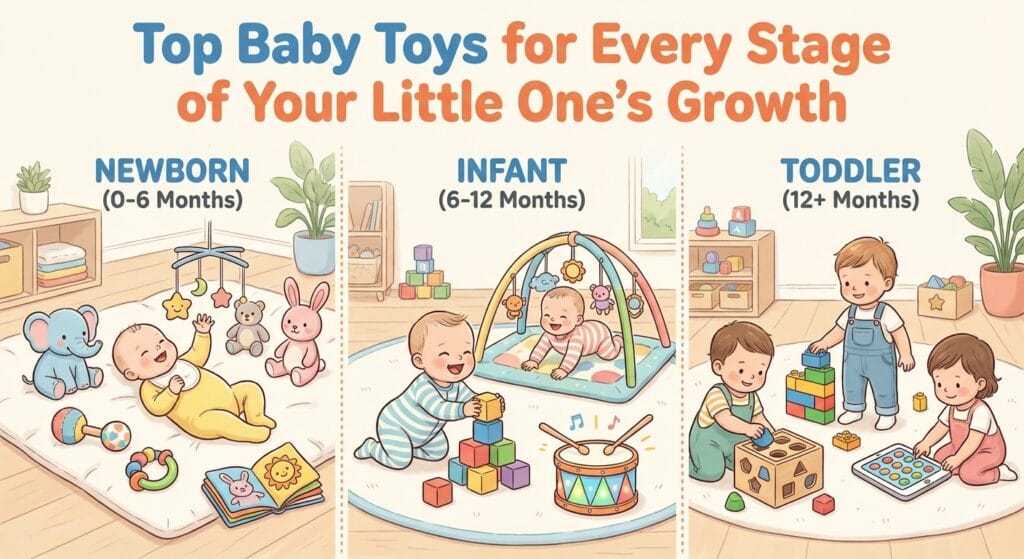
Babies now sit, crawl, and may even start standing. They are curious and love interactive toys.
Best Toys for 6–12 Months
- Stacking Cups and Rings: Teach size, colors, and coordination.
- Shape Sorters: Improve problem-solving and hand-eye coordination.
- Push and Pull Toys: Encourage crawling, standing, and walking.
- Soft Books: Introduce early reading skills with textures and pictures.
Tips for 6–12 Month Toys
- Choose toys that are durable and safe for chewing.
- Look for toys that can grow with your baby.
- Encourage interactive play, like clapping games or peek-a-boo.
4. Toys for 12–18 Months
Toddlers are walking, talking, and exploring more actively. Toys should support creativity, imagination, and movement.
Best Toys for 12–18 Months
- Building Blocks: Large blocks to stack and knock down safely.
- Ride-On Toys: Improve balance and coordination.
- Pretend Play Sets: Simple kitchen or doctor kits.
- Balls and Push Toys: Encourage running and gross motor skills.
Tips for 12–18 Month Toys
- Always supervise toddlers during play.
- Choose toys that teach cause and effect, like a ball rolling down a ramp.
- Encourage pretend play, which helps with language and social skills.
5. Toys for 18–24 Months
At this stage, toddlers love exploring and trying new skills. They enjoy toys that challenge their thinking and imagination.
Best Toys for 18–24 Months
- Shape and Color Puzzles: Boost cognitive skills.
- Musical Instruments: Encourage rhythm, listening, and creativity.
- Simple Art Supplies: Non-toxic crayons and paper.
- Interactive Storybooks: Promote language and early literacy.
Tips for 18–24 Month Toys
- Offer toys that encourage problem-solving.
- Support active play to develop coordination and balance.
- Introduce social play with peers or siblings.
6. Toys for 2–3 Years
By age two, toddlers are independent, imaginative, and developing fine motor skills. Toys should challenge their creativity and learning.
Best Toys for 2–3 Years
- Building Sets: Larger Lego Duplo sets or magnetic tiles.
- Pretend Play Toys: Dollhouses, cars, or kitchen sets.
- Ride-On Scooters: Improve coordination and balance.
- Educational Toys: Shape sorters, matching games, and counting toys.
Tips for 2–3 Year Toys
- Encourage independent play to build confidence.
- Introduce toys that teach basic concepts, like letters, numbers, and colors.
- Make sure toys are safe for toddlers to handle independently.
7. Safety Tips for All Baby Toys
Safety is the most important factor when choosing baby toys. Always follow these guidelines:
- Check for Small Parts: Avoid choking hazards.
- Non-Toxic Materials: Look for BPA-free, phthalate-free toys.
- Avoid Strings and Ropes: Can cause strangulation.
- Regular Cleaning: Wash toys often to prevent germs.
- Age Recommendations: Follow manufacturer’s guidelines.
FAQs About Baby Toys
1. What are the best toys for a newborn?
Soft rattles, high-contrast black-and-white toys, crib mobiles, and safe teething rings are ideal for newborns.
2. Can I give my baby teething toys before six months?
Yes, if your baby is showing signs of teething. Choose soft, BPA-free teething toys.
3. How do I know if a toy is safe for my baby?
Check the age recommendations, avoid small parts, and choose non-toxic materials.
4. What toys help with motor skills?
Stacking blocks, balls, push-pull toys, and activity gyms improve both fine and gross motor skills.
5. Which toys are best for early learning?
Shape sorters, interactive books, and musical instruments help with problem-solving, language, and sensory development.
6. How often should I rotate my baby’s toys?
Every few weeks is good. Rotating keeps toys interesting and stimulates learning.
7. Are educational toys necessary for babies?
Yes, they support cognitive, motor, and sensory development, but simple play and interaction are also very important.
8. Can toddlers play with newborn toys?
Some soft toys are safe, but toddlers need more challenging toys that encourage creativity, movement, and problem-solving.
Conclusion
Choosing the right toys for your baby at every stage is essential for healthy growth, learning, and fun. From newborns exploring the world with rattles and mobiles to toddlers developing creativity and motor skills with building sets and ride-on toys, the right toys make a big difference.
Remember, safety comes first, but also focus on toys that stimulate learning, imagination, and movement. With these tips and ideas, your little one will enjoy every stage of growth, learning new skills while having fun along the way.
Visit our Home Page for more helpful resources.


