


Table of contents
The human hand is one of the most complex and functional parts of the body. From delicate movements like writing and typing to powerful actions such as gripping and lifting, the hand performs countless tasks every day. Behind these abilities lies an intricate network of nerves in the hand that control sensation, movement, and coordination. Understanding hand nerve anatomy, functions, and common nerve-related conditions is essential for recognizing symptoms early and maintaining hand health.
Overview of Nerves in the Hand
Nerves are specialized structures that transmit signals between the brain, spinal cord, and the rest of the body. In the hand, nerves allow you to:
- Feel temperature, pain, and touch
- Move fingers with precision
- Maintain grip strength and coordination
The hand’s nerve supply mainly comes from three major nerves:
- Median nerve
- Ulnar nerve
- Radial nerve
These nerves originate from the brachial plexus in the neck and travel down the arm into the hand.
Anatomy of Hand Nerves
1. Median Nerve
The median nerve runs down the center of the arm and forearm and enters the hand through the carpal tunnel.
Areas Supplied:
- Thumb
- Index finger
- Middle finger
- Half of the ring finger
Functions:
- Controls thumb opposition (touching thumb to fingers)
- Enables fine motor skills
- Provides sensation to the palm side of the hand
Clinical Importance:
Compression of the median nerve causes carpal tunnel syndrome, one of the most common hand nerve disorders.
2. Ulnar Nerve
The ulnar nerve travels along the inner side of the arm and passes behind the elbow (commonly known as the “funny bone”).
Areas Supplied:
- Little finger
- Half of the ring finger
- Inner side of the hand
Functions:
- Controls finger spreading and pinching
- Maintains grip strength
- Supplies intrinsic hand muscles
Clinical Importance:
Damage or compression leads to ulnar nerve entrapment or cubital tunnel syndrome.
3. Radial Nerve
The radial nerve runs along the back of the arm and hand.
Areas Supplied:
- Back of the hand
- Thumb and index finger (partial sensation)
Functions:
- Controls wrist and finger extension
- Enables hand positioning
Clinical Importance:
Injury may cause wrist drop, where the hand cannot extend properly.
Functions of Hand Nerves
Sensory Function
Hand nerves detect:
- Pain
- Temperature
- Pressure
- Texture
This sensory input allows the brain to interpret the environment and prevent injuries.
Motor Function
Nerves control:
- Finger movement
- Grip strength
- Hand coordination
Without proper nerve signals, even strong muscles cannot function effectively.
Autonomic Function
Hand nerves also regulate:
- Blood flow
- Sweating
- Skin temperature
Common Hand Nerve Conditions

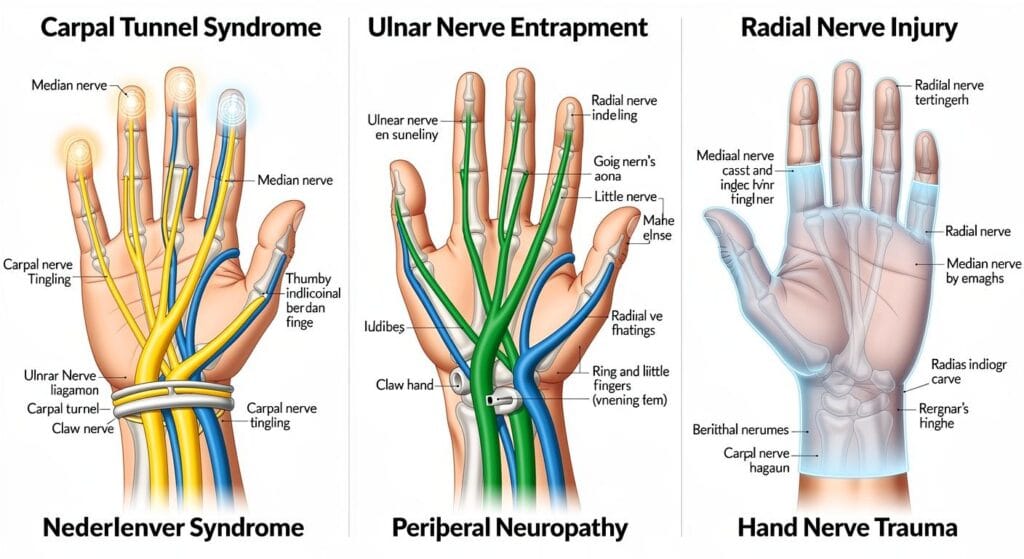
1. Carpal Tunnel Syndrome
Cause:
Compression of the median nerve within the carpal tunnel.
Symptoms:
- Tingling or numbness in thumb and fingers
- Hand weakness
- Pain worsening at night
Risk Factors:
- Repetitive hand movements
- Prolonged typing or mouse use
- Pregnancy
- Diabetes
Treatment:
- Wrist splints
- Anti-inflammatory medications
- Corticosteroid injections
- Surgery in severe cases
2. Ulnar Nerve Entrapment
Cause:
Pressure on the ulnar nerve at the elbow or wrist.
Symptoms:
- Numbness in little and ring fingers
- Weak grip
- Claw-like hand deformity in advanced cases
Treatment:
- Activity modification
- Physical therapy
- Nerve decompression surgery
3. Radial Nerve Injury
Cause:
- Trauma
- Fractures
- Prolonged pressure
Symptoms:
- Wrist drop
- Difficulty straightening fingers
- Loss of sensation on back of hand
Treatment:
- Splinting
- Physical therapy
- Surgical repair if needed
4. Peripheral Neuropathy
Cause:
- Diabetes
- Vitamin deficiencies
- Alcohol abuse
- Infections
Symptoms:
- Burning pain
- Tingling
- Loss of sensation
Treatment:
- Managing underlying condition
- Medications for nerve pain
- Lifestyle changes
5. Hand Nerve Trauma
Cause:
- Cuts
- Burns
- Crush injuries
Symptoms:
- Sudden loss of sensation
- Muscle weakness
- Chronic pain
Treatment:
- Surgical repair
- Rehabilitation therapy
Diagnosis of Hand Nerve Disorders
Doctors may use:
- Physical examination
- Nerve conduction studies
- Electromyography (EMG)
- MRI or ultrasound
Early diagnosis improves treatment outcomes and prevents permanent nerve damage.
Treatment Options for Hand Nerve Problems
Non-Surgical Treatments
- Rest and activity modification
- Physical therapy
- Anti-inflammatory medications
- Splints or braces
Surgical Treatments
- Carpal tunnel release
- Nerve decompression
- Nerve grafting
Recovery depends on the severity and duration of nerve damage.
Preventing Hand Nerve Problems
- Maintain proper hand posture
- Take breaks during repetitive tasks
- Stretch and strengthen hand muscles
- Manage chronic conditions like diabetes
- Avoid prolonged pressure on elbows and wrists
When to See a Doctor
Seek medical attention if you experience:
- Persistent numbness
- Weakness in the hand
- Loss of coordination
- Severe or worsening pain
Early intervention can prevent long-term complications.
FAQs: Nerves in the Hand
1. How many nerves are in the hand?
The hand is mainly supplied by three major nerves: median, ulnar, and radial nerves.
2. What nerve controls finger movement?
Finger movement is controlled by a combination of median and ulnar nerves, while the radial nerve assists with extension.
3. Why do my hands tingle at night?
Nighttime tingling is often caused by carpal tunnel syndrome or nerve compression during sleep.
4. Can nerve damage in the hand heal?
Yes, mild nerve damage can heal over time, but severe injuries may require surgery and rehabilitation.
5. What vitamin deficiency affects hand nerves?
Vitamin B12 deficiency commonly causes nerve damage and tingling in the hands.
6. Is hand numbness always serious?
Occasional numbness may be temporary, but persistent symptoms should be evaluated by a doctor.
7. How long does hand nerve recovery take?
Recovery can take weeks to months, depending on the type and severity of nerve injury.
Conclusion
The nerves in the hand play a vital role in sensation, movement, and daily functionality. Conditions affecting these nerves can significantly impact quality of life if left untreated. By understanding hand nerve anatomy, recognizing early symptoms, and seeking timely medical care, you can protect your hand health and maintain optimal function.
If you experience ongoing numbness, pain, or weakness in your hand, consult a healthcare professional for proper diagnosis and treatment.


