


Table of contents
- 🐶 Can Dogs Get Bird Flu?
- 🦠 How Dogs Can Get Bird Flu (Detailed List)
- 🐕 Bird Flu Symptoms in Dogs — FULL Detailed List
- 🧪 Can Bird Flu Spread from Dog to Human?
- 🐕🦺 Are Some Dog Breeds at Higher Risk?
- 🧍♂️ Is Bird Flu Dangerous for Dogs?
- 🩺 How Vets Diagnose Bird Flu in Dogs
- 💊 Bird Flu Treatment for Dogs (With Detailed List)
- 🛡️ How to Protect Your Dog from Bird Flu (Complete List)
- 1. Do NOT let your dog eat dead birds
- 2. Keep dogs away from poultry farms
- 3. Avoid lakes or ponds with many dead birds
- 4. Clean paws after outdoor walks
- 5. Do not let your dog sniff bird droppings
- 6. Remove outdoor water bowls
- 7. Avoid dog parks during bird flu outbreaks
- 8. Keep yard clean
- 9. Strengthen your dog’s immunity
- 10. Monitor news about local bird flu outbreaks
- 🏥 What to Do If You Think Your Dog Has Bird Flu (Step-by-Step)
- ⚠️ Bird Flu in Dogs vs Dog Flu (Key Differences)
- ❓ FAQs
- 🧾 Conclusion
🐶 Can Dogs Get Bird Flu?
Bird flu, or avian influenza (H5N1), is a serious viral disease affecting birds worldwide. With rising cases in poultry, wild birds, and even some mammals, pet owners are asking:
Can dogs get bird flu?
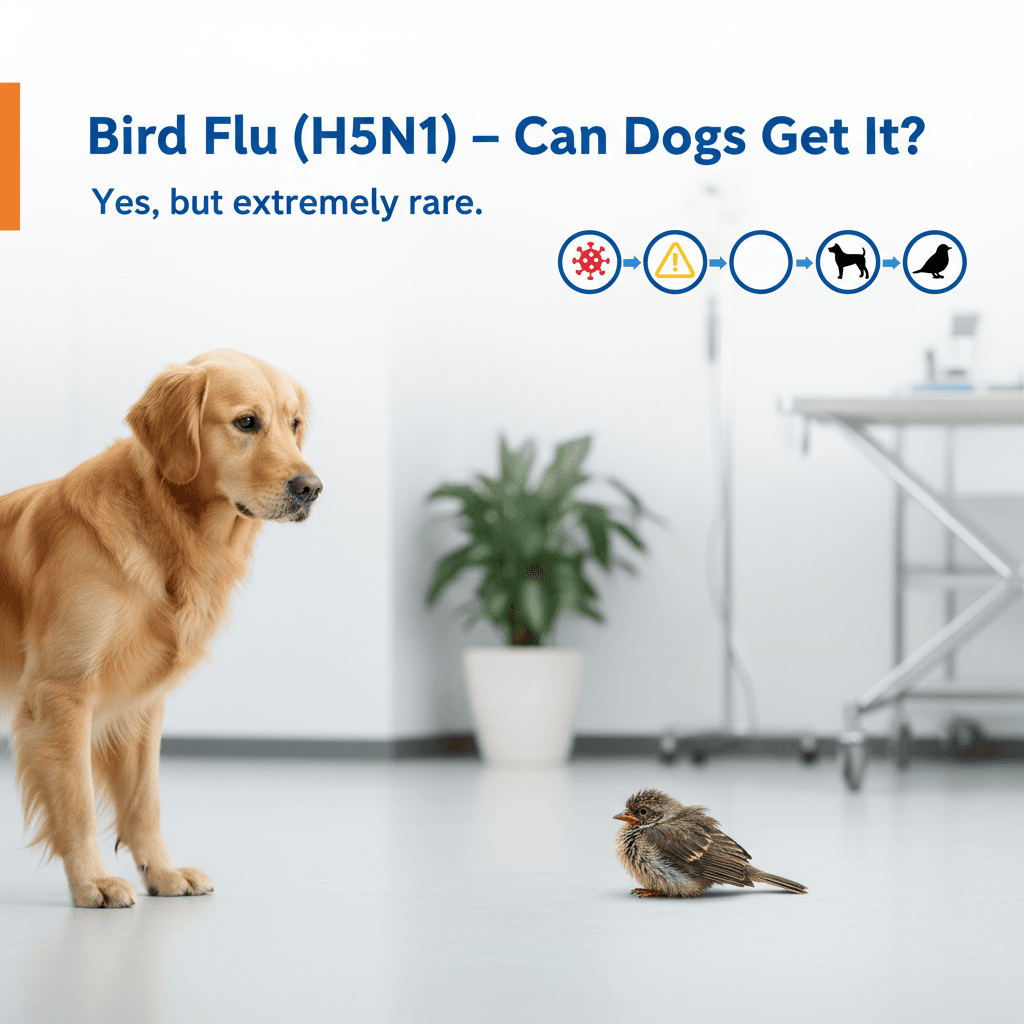
YES — dogs can get bird flu, but it is extremely rare.
Dogs are not natural carriers, but they can become infected through contact with infected birds or contaminated environments.
However:
- Most infected dogs show mild symptoms or no symptoms at all
- Severe cases are rare but possible
- Person-to-dog transmission is not confirmed
- Dog-to-dog transmission is extremely limited
Understanding the risks helps you protect your pet properly.
🦠 How Dogs Can Get Bird Flu (Detailed List)

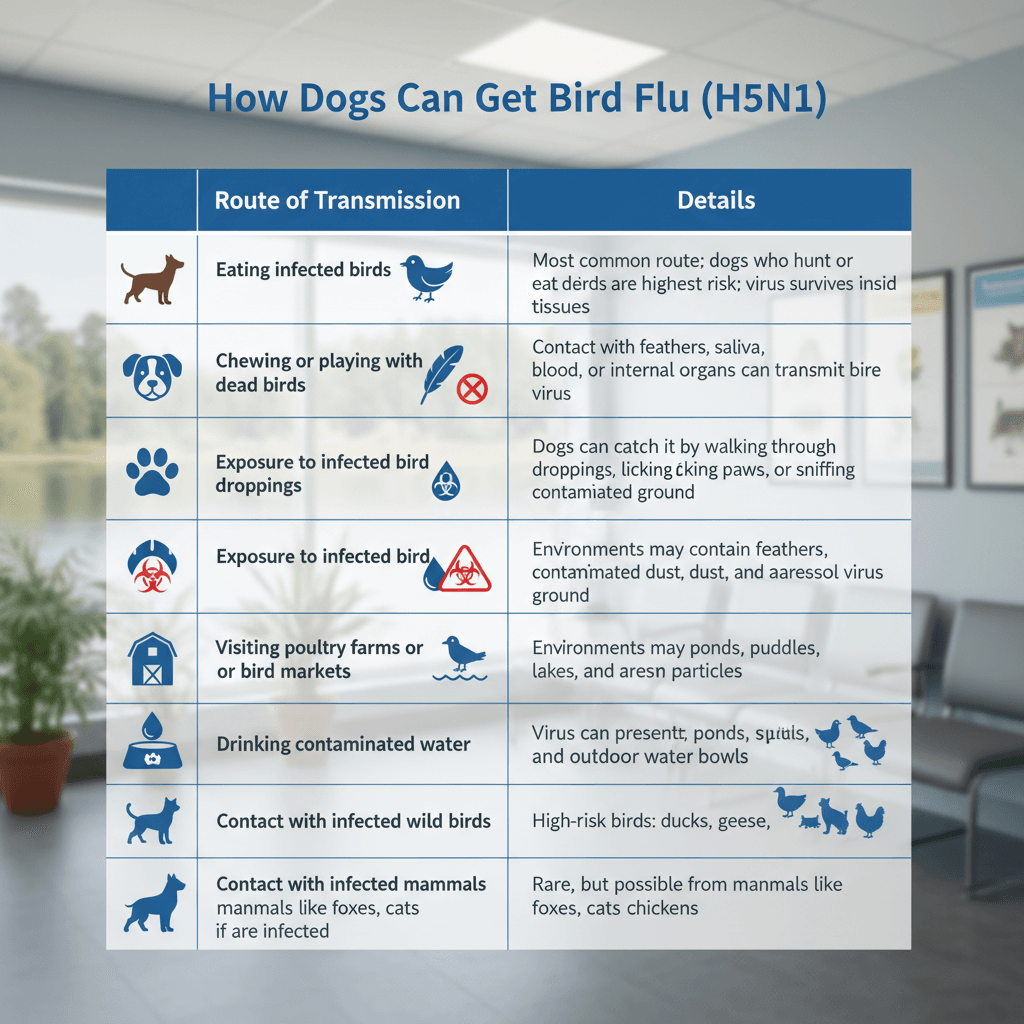
Dogs can only get bird flu through direct exposure to the virus. Here are all the known transmission routes with added details:
1. Eating infected birds
- Most common route
- Dogs who hunt or eat dead birds are at highest risk
- Virus survives inside the bird’s tissues
2. Chewing or playing with dead birds
Even if the dog doesn’t swallow the bird, contact with:
- feathers
- saliva
- blood
- internal organs
can transmit the virus.
3. Exposure to infected bird droppings
Bird flu spreads heavily through poop. Dogs can catch it by:
- walking through infected droppings
- licking their paws afterward
- sniffing contaminated ground
4. Visiting poultry farms or bird markets
These environments may contain:
- infected feathers
- contaminated dust
- virus aerosol particles
5. Drinking contaminated water
Wild birds shed the virus into:
- ponds
- puddles
- lakes
- water bowls left outside
6. Contact with infected wild birds
Especially high-risk:
- ducks
- geese
- crows
- pigeons
- chickens
7. Contact with infected mammals
A rare possibility, but technically possible if mammals like:
- foxes
- cats
- raccoons
are infected first.
🐕 Bird Flu Symptoms in Dogs — FULL Detailed List
Dog symptoms vary from mild to severe depending on the viral strain and the dog’s immune response.
A. Mild Symptoms (Most Common)
- Coughing
- Sneezing
- Mild fever
- Runny nose
- Watery eyes
- Low appetite
- Lethargy
Most dogs recover on their own.
B. Moderate Symptoms
- High fever
- Heavy coughing
- Rapid breathing
- Eye inflammation
- Vomiting
- Diarrhea
- Mild dehydration
Needs veterinary support.
C. Severe or Rare Symptoms
These are rare but possible:
- Difficulty breathing
- Blue gums
- Collapse
- Neurological issues (circling, seizures)
- Severe pneumonia
- Internal bleeding
- Sudden death (very rare)
Dogs with weak immune systems are at higher risk.
🧪 Can Bird Flu Spread from Dog to Human?
There is NO confirmed case of dog-to-human bird flu transmission.
Reasons:
- Dogs shed very low levels of the virus
- Virus does not replicate strongly in dogs
- Transmission efficiency is extremely low
However, experts still recommend avoiding contact with pets showing respiratory symptoms.
🐕🦺 Are Some Dog Breeds at Higher Risk?
Risk is based on behavior rather than breed. Dogs with hunting or outdoor habits are more likely to be exposed.
Higher-risk
- Labrador Retriever
- Golden Retriever
- Beagle
- German Shepherd
- Any farm dog
- Any stray dog
Lower-risk
- Indoor dogs
- Small apartment dogs
- Groomed pets
- Dogs without outdoor access
🧍♂️ Is Bird Flu Dangerous for Dogs?
Most cases are mild. But danger levels depend on:
Low Danger
- When the dog has minimal exposure
- When symptoms are mild
- When treated quickly
Moderate Danger
- Infection with a stronger H5N1 variant
- Co-infection with other respiratory viruses
High Danger (Rare)
- Puppies
- Senior dogs
- Dogs with weak immunity
- Dogs with heart or lung diseases
🩺 How Vets Diagnose Bird Flu in Dogs
Veterinarians use a combination of tests:
1. PCR Test
The gold standard. Detects viral RNA.
2. Nasal or throat swab
Similar to a COVID test.
3. Blood test
Checks immune response.
4. Chest X-ray
To assess pneumonia.
5. Complete health history
Exposure to birds? Hunting? Farms? Lakes?
💊 Bird Flu Treatment for Dogs (With Detailed List)
There is no specific antiviral drug for dogs, but vets use supportive treatment:
1. Fever control medications
- Vet-prescribed NSAIDs
- DO NOT give human medicine
2. Hydration therapy
- Electrolytes
- IV fluids if severe
3. Breathing support
- Nebulization
- Oxygen therapy
4. Cough and mucus management
- Safe cough suppressants
- Anti-inflammatory medicine
5. Antibiotics (only if secondary infection)
Used to control pneumonia.
6. Isolation
To prevent spreading to other pets.
🛡️ How to Protect Your Dog from Bird Flu (Complete List)
Here are expanded, practical, and detailed prevention methods:
1. Do NOT let your dog eat dead birds
Teach them the “Leave it” command.
2. Keep dogs away from poultry farms
Especially farms reporting bird deaths.
3. Avoid lakes or ponds with many dead birds
Wild birds actively shed the virus.
4. Clean paws after outdoor walks
Use pet-safe wipes or soap.
5. Do not let your dog sniff bird droppings
Droppings are the main transmission source.
6. Remove outdoor water bowls
Birds may drink from them.
7. Avoid dog parks during bird flu outbreaks
Dogs can pick up contaminated feathers.
8. Keep yard clean
Remove feathers
Remove dead birds
Disinfect high-risk areas
9. Strengthen your dog’s immunity
- Good diet
- Regular exercise
- Supplements (vet-approved)
10. Monitor news about local bird flu outbreaks
Stay updated with local animal health reports.
🏥 What to Do If You Think Your Dog Has Bird Flu (Step-by-Step)
Step 1: Isolate your dog
Keep away from other pets.
Step 2: Call your vet
Explain the symptoms and any exposure to birds.
Step 3: Don’t panic
Most cases are mild.
Step 4: Follow vet instructions
Testing may be required.
Step 5: Maintain hygiene
Wash hands after touching your dog.
⚠️ Bird Flu in Dogs vs Dog Flu (Key Differences)
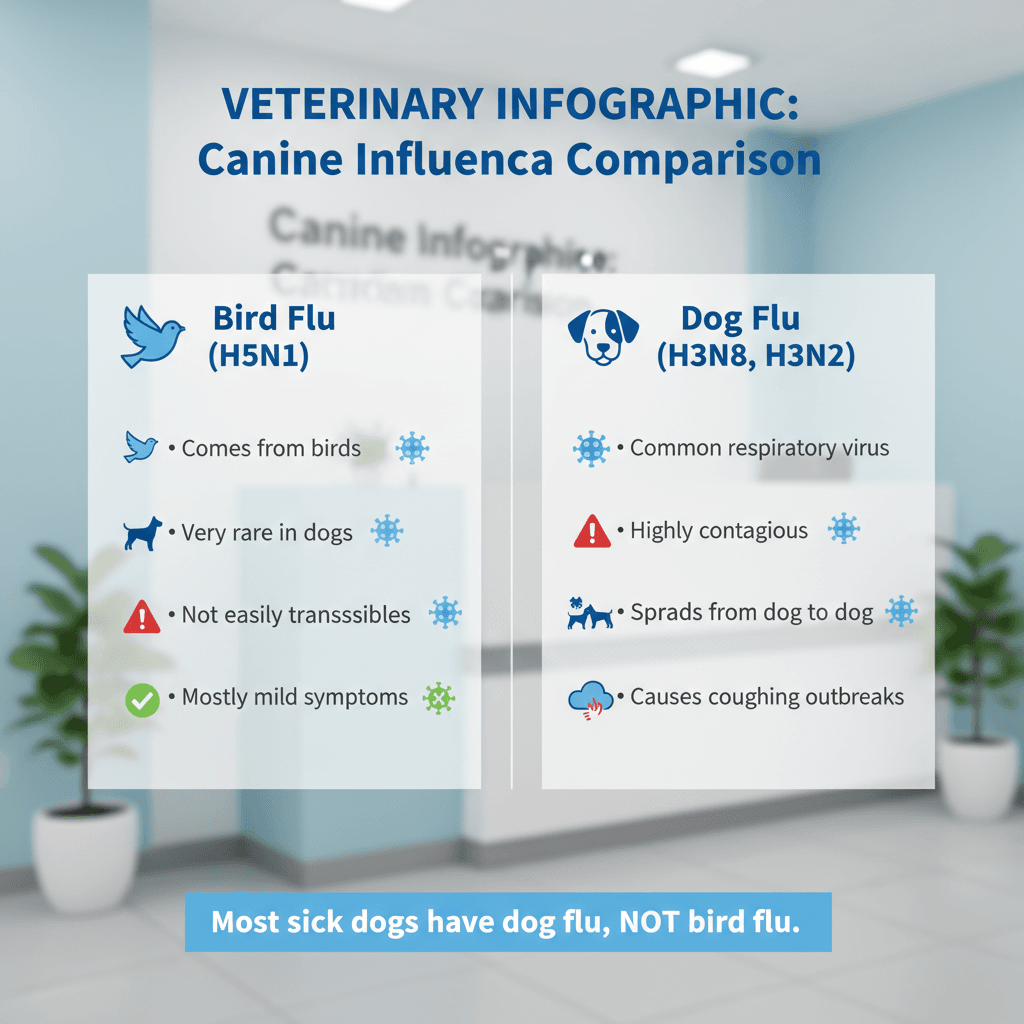
Bird Flu (H5N1)
- Comes from birds
- Very rare in dogs
- Not easily transmissible
- Mostly mild symptoms
Dog Flu (H3N8, H3N2)
- Common respiratory virus
- Highly contagious
- Spreads from dog to dog
- Causes coughing outbreaks
Most sick dogs have dog flu, not bird flu.
❓ FAQs
Yes, but it is extremely rare.
Most cases are mild and recover with care.
Store-bought chicken is safe because it is tested and sanitized.
Raw chicken from farms is risky.
There is no evidence of dog-to-human transmission.
Usually 5–12 days.
Severe cases may take 2–3 weeks.
Yes — puppies are more vulnerable due to weak immunity.
No.
Only birds have vaccines.
Extremely unlikely.
Virus does not replicate strongly in dogs.
Bird flu can survive:
in water: up to 4 weeks
in droppings: up to 1 week
on surfaces: 48 hours
Yes — cats are more: likely to get infected than dogs.
No, but avoid:
poultry farms
bird-heavy areas
lakes with dead birds
🧾 Conclusion
While dogs canget bird flu, the infection is rare, usually mild, and not a significant threat to most pets. With simple precautions—like avoiding dead birds, keeping the yard clean, and monitoring symptoms—you can keep your dog safe and healthy.
Bird flu is serious for birds, but for dogs, the risk remains low and manageable.


