


Table of contents
- 1. What is an ACE Bandage?
- 2. What Are the Uses of an ACE Bandage?
- 3. What Are the Benefits of Using an ACE Bandage?
- 4. How to Choose the Right ACE Bandage?
- 5. How to Properly Apply an ACE Bandage?
- 6. Common Mistakes to Avoid
- 7. Can ACE Bandages Be Reused?
- 8. How Long Can You Wear an ACE Bandage?
- 9. Are ACE Bandages Safe for Everyone?
- 10. Can ACE Bandages Replace a Cast or Splint?
- 11. Can ACE Bandages Be Used for Chronic Conditions?
- 12. ACE Bandages vs. Elastic Tubular Bandages: What’s the Difference?
- 13. Can ACE Bandages Be Used for Sports?
- 14. How to Remove an ACE Bandage Safely?
- 15. Tips for Maximizing ACE Bandage Benefits
- 16. SEO-Friendly Summary: ACE Bandage Key Takeaways
- Conclusion
An ACE bandage is one of the most versatile medical supplies found in homes, clinics, and sports facilities. Lightweight, elastic, and easy to use, it plays a critical role in treating injuries, supporting joints, and aiding recovery. In this detailed guide, we’ll explore the most frequently asked questions about ACE bandages, covering their uses, benefits, and proper application techniques.
1. What is an ACE Bandage?
An ACE bandage is an elastic, stretchable bandage used to provide compression, support, and immobilization to injured muscles, joints, or soft tissues. Made from cotton, polyester, and elastic fibers, it conforms to the shape of the body while offering firm but gentle pressure. ACE is a brand name, but it’s commonly used as a generic term for elastic bandages.
Key Features:
- Elastic and stretchable
- Lightweight and breathable
- Reusable and washable
- Available in multiple widths and lengths
2. What Are the Uses of an ACE Bandage?

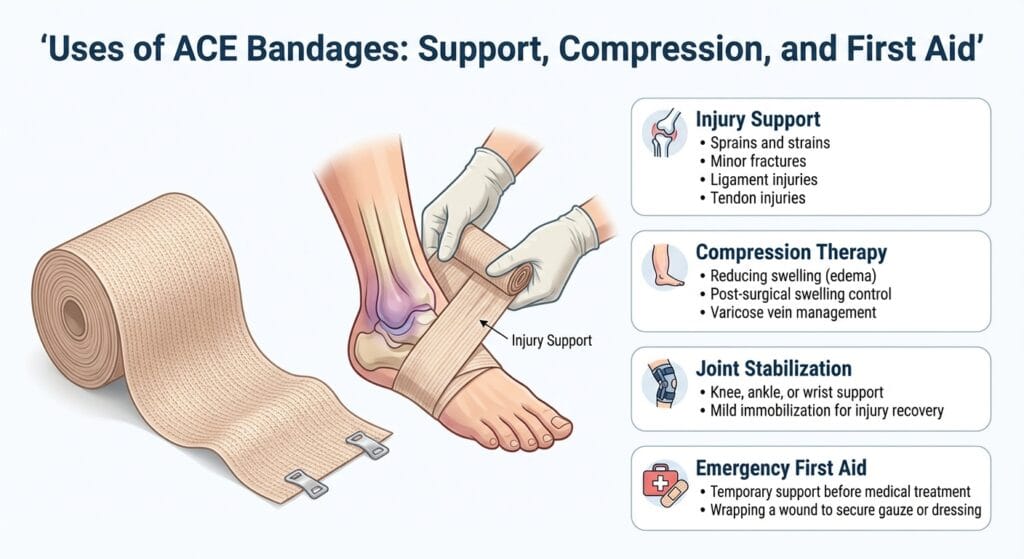
ACE bandages are widely used in medical, sports, and home settings. Some common uses include:
a) Injury Support
- Sprains and strains
- Minor fractures
- Ligament injuries
- Tendon injuries
b) Compression Therapy
- Reducing swelling (edema)
- Post-surgical swelling control
- Varicose vein management
c) Joint Stabilization
- Knee, ankle, or wrist support during activities
- Providing mild immobilization for injury recovery
d) Emergency First Aid
- Temporary support before medical treatment
- Wrapping a wound to secure gauze or dressing
3. What Are the Benefits of Using an ACE Bandage?
ACE bandages offer numerous benefits beyond basic injury care. These include:
a) Swelling Reduction
Elastic compression helps reduce inflammation by promoting blood flow and preventing fluid accumulation in injured areas.
b) Pain Relief
Compression can stabilize injured tissues, minimizing movement and discomfort.
c) Joint Protection
By providing support, ACE bandages protect joints during exercise, rehabilitation, or everyday activities.
d) Versatility
ACE bandages are adjustable, reusable, and can be used for multiple injuries on different body parts.
e) Cost-Effective
They are affordable, widely available, and reusable after washing, making them an economical option for long-term injury care.
4. How to Choose the Right ACE Bandage?
Choosing the right ACE bandage is essential for effective support and comfort. Consider the following:
a) Width
- Small (2–3 inches): Ideal for fingers, wrists, and small joints.
- Medium (4–5 inches): Best for knees, ankles, and elbows.
- Large (6 inches or more): Suitable for thighs or larger muscle groups.
b) Length
Most ACE bandages range from 4 to 10 feet. Longer bandages are preferable for larger areas like legs or arms.
c) Elasticity
- Mild stretch: Good for gentle compression.
- Moderate stretch: Offers firm support for sprains or swelling.
- High stretch: Useful for heavy support or long-term compression therapy.
d) Closure Type
- Metal clips: Traditional and secure.
- Hook-and-loop (Velcro): Convenient, reusable, and easy to adjust.
5. How to Properly Apply an ACE Bandage?
Proper application ensures effective support and prevents complications. Follow these steps:
1: Prepare the Area
- Clean and dry the skin.
- If needed, apply a thin layer of padding to prevent friction or skin irritation.
2: Start Wrapping
- Begin wrapping at the farthest point from the heart (distal end).
- Use a slight overlap of 50% on each turn.
3: Apply Even Pressure
- Ensure the bandage is snug but not too tight.
- Avoid cutting off circulation; watch for tingling, numbness, or discoloration.
4: Secure the Bandage
- Use metal clips or Velcro to secure the end.
- Adjust if there is excessive tightness or slipping.
5: Monitor and Reapply
- Check circulation periodically.
- Remove or loosen if swelling worsens or skin turns pale or blue.
6. Common Mistakes to Avoid
Even a properly chosen ACE bandage can be ineffective if misused. Avoid these common mistakes:
- Wrapping too tightly, causing restricted blood flow
- Not overlapping enough, leading to slippage
- Ignoring skin irritation or numbness
- Using a bandage that is too short or narrow for the area
7. Can ACE Bandages Be Reused?
Yes, ACE bandages are designed for multiple uses. To maintain hygiene and elasticity:
- Wash by hand with mild soap and warm water.
- Avoid bleach or harsh detergents.
- Air dry completely before reuse.
- Replace if the bandage loses elasticity or becomes frayed.
8. How Long Can You Wear an ACE Bandage?
Duration depends on injury type and compression needs:
- Acute injuries: 15–30 minutes at a time, then remove to check circulation.
- Post-surgical or chronic swelling: Follow medical advice, usually 1–2 hours intervals initially.
- Sports or support use: Can be worn during activity but should be removed after to allow skin to breathe.
9. Are ACE Bandages Safe for Everyone?
Generally, ACE bandages are safe for most adults and children when used correctly. However, caution is needed for:
- Diabetics (risk of reduced circulation)
- People with deep vein thrombosis (DVT)
- Those with fragile skin or allergies
- Individuals with severe cardiovascular or circulatory issues
Tip: Always consult a healthcare professional for serious injuries or if unsure about usage.
10. Can ACE Bandages Replace a Cast or Splint?
No, ACE bandages are supportive but do not immobilize bones like a cast or splint. They are suitable for:
- Mild sprains and strains
- Compression and swelling control
- Short-term joint support
For fractures or severe ligament injuries, professional medical treatment is necessary.
11. Can ACE Bandages Be Used for Chronic Conditions?
Yes, ACE bandages are often recommended for:
- Varicose veins
- Chronic swelling (edema)
- Post-surgical limb support
They help improve circulation, reduce discomfort, and provide consistent compression. For chronic conditions, consult a doctor to ensure the correct compression level.
12. ACE Bandages vs. Elastic Tubular Bandages: What’s the Difference?
While similar, there are differences:
| Feature | ACE Bandage | Elastic Tubular Bandage |
|---|---|---|
| Shape | Long strip | Tubular sleeve |
| Adjustment | Wraps and secures with clips | Slip-on, fixed size |
| Use | Custom compression | Joint or finger coverage |
| Flexibility | High | Moderate |
ACE bandages are more versatile for custom compression and injury-specific support.
13. Can ACE Bandages Be Used for Sports?
Absolutely! Athletes use ACE bandages to:
- Stabilize ankles, knees, and wrists
- Prevent reinjury during training
- Control swelling after minor injuries
Pro Tip: Always apply before activity, not too tight, and remove after finishing.
14. How to Remove an ACE Bandage Safely?
- Loosen clips or Velcro.
- Gently unwind the bandage.
- Check the skin for redness, bruising, or irritation.
- Wash the bandage if needed for next use.
15. Tips for Maximizing ACE Bandage Benefits
- Use padding for bony areas to avoid skin friction.
- Avoid excessive tightness to prevent circulation issues.
- Keep the limb elevated when wrapping to reduce swelling.
- Rotate positions slightly during activity to maintain comfort.
- Consult a professional for serious injuries.
16. SEO-Friendly Summary: ACE Bandage Key Takeaways
- ACE bandages provide compression, support, and mild immobilization.
- They are essential for sprains, strains, swelling control, and joint support.
- Proper application involves even wrapping, slight overlap, and secure fastening.
- Reusable and versatile, ACE bandages are ideal for home, sports, and medical use.
- Always monitor circulation and consult a doctor for severe injuries.
Conclusion
ACE bandages are a must-have for first aid, sports, and daily injury management. Their versatility, cost-effectiveness, and ease of use make them indispensable. By understanding their uses, benefits, and proper application techniques, you can enhance recovery, reduce swelling, and protect joints safely. Whether at home, on the field, or in the clinic, mastering ACE bandage application ensures better injury management and faster healing.


