

Encrypted Apps Amid Cyberattack: Why Security Matters More Than Ever

In today’s digital world, cyberattacks are becoming more frequent, sophisticated, and damaging. From personal data leaks to large-scale corporate breaches, no one is truly safe. This makes the role of encrypted apps amid cyberattack more crucial than ever. Encrypted apps are designed to protect your data from hackers, ensuring privacy, confidentiality, and security in an era of constant cyber threats.
Table of contents
- Understanding Encryption in Apps
- Why Cybersecurity Threats Are Growing
- Benefits of Using Encrypted Apps Amid Cyberattack
- Top Encrypted Apps to Consider
- How to Choose the Right Encrypted App Amid Cyberattack
- Best Practices for Staying Safe Amid Cyberattacks
- Common Misconceptions About Encrypted Apps
- Related Technologies Supporting Encryption
- The Future of Encryption Amid Cyberattack
- Frequently Asked Questions (FAQs)
- Conclusion
Understanding Encryption in Apps
Encryption is the process of converting readable data into coded information that only authorized users can access. In simple terms, it’s like locking your digital files in a safe, where only the keyholder can open it.
Apps that use encryption ensure that your messages, files, and personal information remain secure—even if intercepted by hackers during a cyberattack.
How Encrypted Apps Work
Encrypted apps work through:
- End-to-End Encryption (E2EE)
This ensures that only the sender and the recipient can read the data. Even the app provider cannot access the information. Apps like WhatsApp and Signal use E2EE to protect messages. - Encryption in Transit
This protects your data while it moves from your device to the server. HTTPS websites and encrypted cloud storage use this method. - Encryption at Rest
Data stored on servers or devices is encrypted to prevent unauthorized access in case of a breach.
Why Cybersecurity Threats Are Growing
The increase in cyberattacks has made encryption indispensable. Some key reasons include:
- Rise in Ransomware Attacks
Hackers are increasingly using ransomware to lock users’ data and demand payment for its release. - Phishing Scams
Fraudulent emails and websites trick users into revealing sensitive information. - Data Breaches
Companies that fail to secure user data can face reputational damage, fines, and loss of customer trust. - IoT Vulnerabilities
Internet of Things (IoT) devices like smart home gadgets often lack strong security measures, making them prime targets for cyberattacks.
With these growing threats, encrypted apps amid cyberattack provide a much-needed safety net for both individuals and businesses.
Benefits of Using Encrypted Apps Amid Cyberattack
Encrypted apps offer multiple advantages, including:
1. Privacy Protection
Encryption ensures that your messages, calls, and files remain private. Even if intercepted, hackers cannot decipher the information without the encryption key.
2. Data Security
Your personal and business data, including financial information, confidential files, and sensitive communications, remain secure from cybercriminals.
3. Compliance with Regulations
Encrypted apps help businesses comply with data protection laws like GDPR, HIPAA, and CCPA, avoiding penalties and legal issues.
4. Trust and Reputation
For companies, using encrypted communication apps builds trust with clients and stakeholders, showing a commitment to security and privacy.
5. Reduced Risk of Identity Theft
By safeguarding personal information, encrypted apps reduce the chances of identity theft or fraud.
Top Encrypted Apps to Consider
Here are some of the best encrypted apps widely trusted for security:
- Signal
- End-to-end encrypted messages and calls
- Open-source and highly trusted
- Minimal data collection
- WhatsApp
- Popular app with E2EE for messages, calls, and media
- Widely used, user-friendly interface
- ProtonMail
- Encrypted email service
- Based in Switzerland with strong privacy laws
- Telegram (Secret Chats)
- Offers end-to-end encryption for secret chats
- Self-destructing messages option
- Threema
- Focuses on privacy and anonymity
- No phone number required
These apps demonstrate that encryption is not just for tech experts—it’s now accessible for everyone.
How to Choose the Right Encrypted App Amid Cyberattack
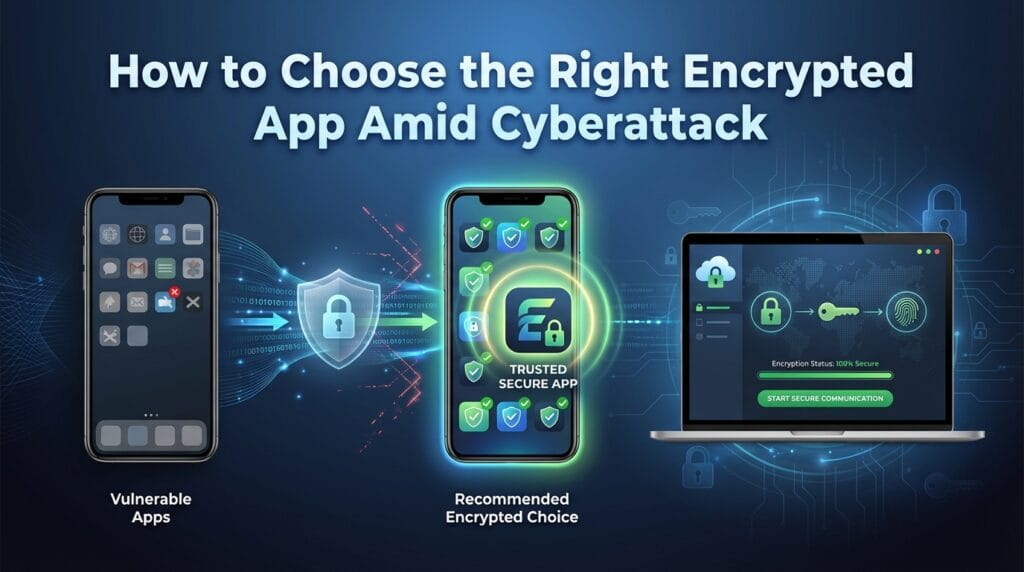
Choosing the best encrypted app depends on several factors:
1. Type of Encryption
Ensure the app uses end-to-end encryption rather than only encryption in transit.
2. Transparency and Trustworthiness
Opt for apps that are open-source or audited regularly. Avoid apps with questionable privacy policies.
3. Platform Compatibility
Make sure the app is compatible with your devices—mobile, desktop, or both.
4. Features and Usability
Consider what you need: messaging, file sharing, email, or cloud storage. The app should be easy to use without compromising security.
5. Minimal Data Collection
The app should collect as little personal data as possible to reduce risks in case of breaches.
Best Practices for Staying Safe Amid Cyberattacks
Using encrypted apps is vital, but you also need to follow security best practices:
- Enable Two-Factor Authentication (2FA)
Adds an extra layer of protection to your accounts. - Keep Software Updated
Regular updates fix vulnerabilities and improve security. - Use Strong Passwords
Avoid common passwords and use a password manager to generate secure ones. - Avoid Public Wi-Fi for Sensitive Tasks
Public networks can be a hotspot for hackers. - Regularly Backup Encrypted Data
Prevents loss during accidental deletion or ransomware attacks.
Common Misconceptions About Encrypted Apps
Myth 1: Encryption Makes Apps Hard to Use
Many modern encrypted apps are user-friendly and simple to operate, even for beginners.
Myth 2: Encrypted Apps Guarantee 100% Security
While encryption protects data, it cannot prevent all cyberattacks. Security also depends on user behavior and system updates.
Myth 3: Only Tech Experts Need Encryption
Everyone handling sensitive data—messages, emails, files—benefits from using encrypted apps amid cyberattack.
Related Technologies Supporting Encryption
Alongside encrypted apps, other technologies strengthen digital security:
- VPNs (Virtual Private Networks)
Hide your IP address and encrypt internet traffic. - Secure Cloud Storage
Providers like Tresorit and Sync.com use encryption to secure files. - Password Managers
Encrypt stored passwords and help avoid reuse of weak passwords. - Antivirus and Anti-malware Software
Protect devices from malware that can bypass encryption.
The Future of Encryption Amid Cyberattack
As cyberattacks become more advanced, encryption technology is evolving to meet new challenges:
- Quantum-Resistant Encryption
Preparing for the era of quantum computing that could break current encryption methods. - AI-Powered Threat Detection
AI tools can detect unusual patterns, alerting users before breaches occur. - Integration in Everyday Apps
Messaging, email, and file storage apps are increasingly adopting encryption as a standard feature.
Frequently Asked Questions (FAQs)
An encrypted app is a software application that uses encryption to protect data, ensuring only authorized users can access it.
Encrypted apps provide strong security, especially end-to-end encryption, but user behavior and system updates also impact security.
While encryption makes hacking very difficult, no system is 100% safe. Combining encryption with best security practices is essential.
Yes. Many modern encrypted apps like Signal and WhatsApp are designed to be user-friendly for beginners.
Absolutely. Businesses can use encrypted apps for secure communication, file sharing, and compliance with data protection laws.
Look for end-to-end encryption, minimal data collection, transparency, device compatibility, and ease of use.
Encryption is vital but should be combined with 2FA, strong passwords, software updates, and safe online behavior.
Conclusion
The importance of encrypted apps amid cyberattack cannot be overstated. With the rising frequency of cyber threats, individuals and businesses alike must prioritize encryption to safeguard sensitive data. By understanding encryption, choosing the right apps, and following best practices, you can protect your privacy, maintain trust, and stay one step ahead of cybercriminals.
Encryption is no longer optional—it’s essential in a world where cyberattacks are a constant risk. Start today by adopting secure, encrypted apps and implementing strong security practices. Your data is worth it.