



Asymmetry Explained: Meaning, Types, and Real-World Applications
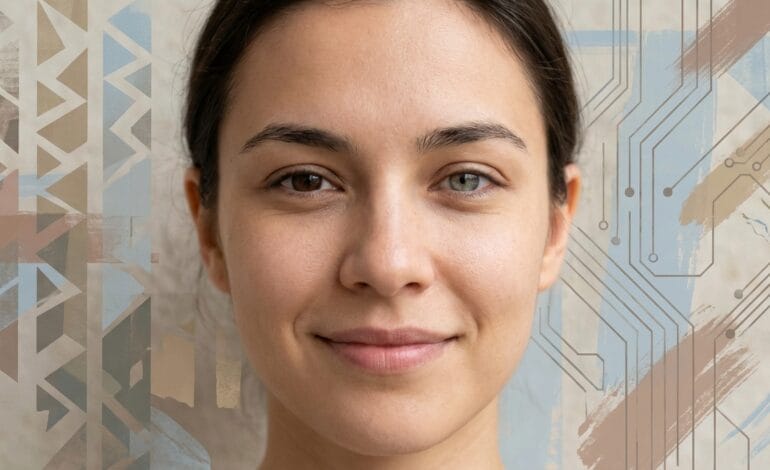

Table of contents
Asymmetry is a concept that appears everywhere around us—from the human body and nature to mathematics, art, science, and modern technology. While symmetry often represents balance and harmony, asymmetry brings uniqueness, function, and realism. Understanding asymmetry helps us better analyze natural forms, design effective systems, and appreciate why perfect balance is not always necessary or even desirable.
What Is Asymmetry?
Asymmetry refers to the absence or lack of symmetry. When an object, system, or structure cannot be divided into identical or mirrored parts, it is considered asymmetrical. In simple terms, represents imbalance or unevenness, but this quality is not necessarily negative. In many situations, it improves functionality, encourages creativity, and supports adaptability.
Unlike symmetry, which relies on evenly distributed elements, asymmetry introduces variation in size, shape, position, or proportion. This natural variation often mirrors real-world conditions more accurately and makes designs, systems, and structures feel more realistic and dynamic..
Importance of Asymmetry

Asymmetry plays a critical role in both natural and man-made systems. Perfect symmetry is rare in nature, and asymmetry often provides advantages such as flexibility, efficiency, and individuality.
Key reasons is important include:
- It allows natural organisms to adapt and survive
- It improves visual interest and design appeal
- It enhances functionality in engineering and technology
- It reflects real-world diversity and imperfection
Types of Asymmetry
Asymmetry can be categorized into several types depending on the field of study and application. Below are the most common types explained in detail.
1. Biological Asymmetry
Biological asymmetry refers to differences between the left and right sides of living organisms. While humans appear symmetrical externally, internal organs such as the heart, liver, and lungs are asymmetrically placed.
Examples include:
- The human heart located on the left side
- Unequal size of internal organs
- Asymmetrical facial features
This type is essential for proper biological function and evolution.
2. Visual and Artistic Asymmetry
In art and design, asymmetry is used to create dynamic, engaging compositions. Instead of evenly balancing elements, designers distribute visual weight unevenly to draw attention and evoke emotion.
Common uses include:
- Modern graphic design layouts
- Architecture with unconventional shapes
- Photography compositions using the rule of thirds
3. Mathematical Asymmetry
Mathematical asymmetry occurs when equations, graphs, or shapes do not mirror themselves across an axis. This concept is important in geometry, statistics, and physics.
Examples include:
- Asymmetrical probability distributions
- Irregular geometric shapes
- Non-linear equations
4. Functional Asymmetry
Functional occurs when different parts of a system perform different roles. This is common in technology, engineering, and neuroscience.
Examples include:
- Left and right brain hemispheres with different functions
- Keyboard layouts designed for efficiency
- Asymmetrical tools optimized for specific tasks
Asymmetry vs Symmetry Comparison
| Feature | Symmetry | Asymmetry |
|---|---|---|
| Balance | Equal and mirrored | Unequal and varied |
| Appearance | Predictable and uniform | Dynamic and unique |
| Common in Nature | Rare | Very common |
| Design Impact | Calm and stable | Energetic and engaging |
| Functionality | Limited adaptability | High adaptability |
Real-World Applications of Asymmetry
Asymmetry is not just a theoretical concept; it has practical applications in many fields.
Asymmetry in Nature
Nature is full of asymmetrical forms that support survival and efficiency. Trees grow unevenly based on sunlight, animals develop dominant limbs, and landscapes are rarely perfectly balanced.
Benefits include:
- Improved mobility
- Better resource utilization
- Evolutionary advantage
Asymmetry in Architecture and Design
Modern architecture often embraces to create bold, functional structures. Buildings with uneven shapes can better handle wind resistance, maximize space, and create visual impact.
Common applications:
- Skyscrapers with irregular facades
- Asymmetrical room layouts
- Creative interior design elements
Asymmetry in Technology
Technology relies heavily on optimization. Devices are designed to fit human usage patterns rather than perfect balance.
Examples include:
- Smartphone button placement
- User interface layouts
- Computer hardware designs
Advantages and Disadvantages of Asymmetry
Advantages
- Encourages creativity and innovation
- Improves functionality and usability
- Reflects natural and realistic forms
Disadvantages
- Can appear unbalanced if poorly designed
- Requires careful planning in design
- May be harder to analyze mathematically
Asymmetry in Everyday Life
You encounter asymmetry daily without realizing it. From the way you write with one hand to how your face looks slightly different on each side, is part of human identity.
Everyday examples include:
- Clothing designs
- Handwriting styles
- Urban planning layouts
FAQs
What does mean in simple words?
Asymmetry means lack of balance or equality between two sides of an object or system.
Is asymmetry bad?
No, is often beneficial. It improves functionality, creativity, and realism in many fields.
Why is common in nature?
Nature prioritizes survival and efficiency, not perfect balance. Helps organisms adapt and evolve.
What is used for in design?
Designers use to create visually interesting, modern, and engaging layouts that guide user attention.
Can something be slightly asymmetrical?
Yes, most things are slightly asymmetrical. Even objects that look symmetrical often have minor differences.
For a deeper scientific definition , you can explore this detailed explanation on Wikipedia